
The Year of the Chicken Bone
Or: How Liz Turns Her Deep Freeze Into a Poultry Archive
If you want to know who a person really is, open their freezer.
Not the top drawer.
Not the ice maker.
I mean, dig in.
Not the ice maker.
I mean, dig in.
Because somewhere between the frozen pie crust and emergency pizza, you’ll find the truth. And in Liz’s case, the truth is this:
She has been saving chicken bones. All. Year. Long.
Not one rotisserie carcass here and there. Not a casual zip-top bag. No.
We’re talking labeled bags. Stacked bags. Strategic freezer Tetris.
We’re talking labeled bags. Stacked bags. Strategic freezer Tetris.
By December, the deep freeze is no longer a freezer.
It is a bone vault.
It is a bone vault.
Steve opens it looking for ice cream, and finds only bags of chicken bones. He stares. Closes it. Opens it again. Closes it harder.
“Why,” he whispers, “are there so many bones?”
Liz doesn’t look up.
“Stock season is coming.”
“Stock season is coming.”
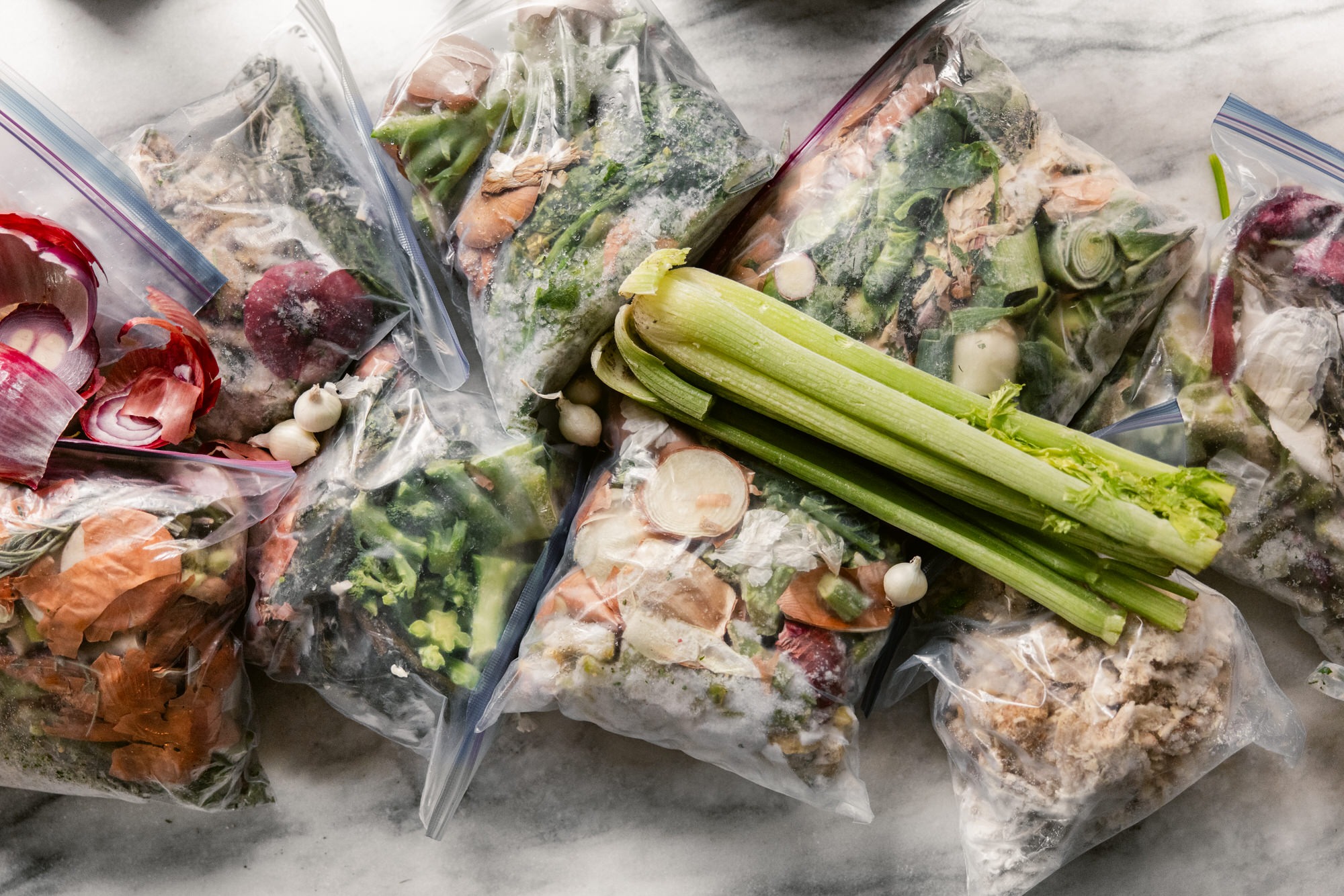
Why We Save the Scraps (Yes, All of Them)
The best chicken stock doesn’t come from a box.
It comes from what you were about to throw away.
It comes from what you were about to throw away.
Over the course of the year, we save:
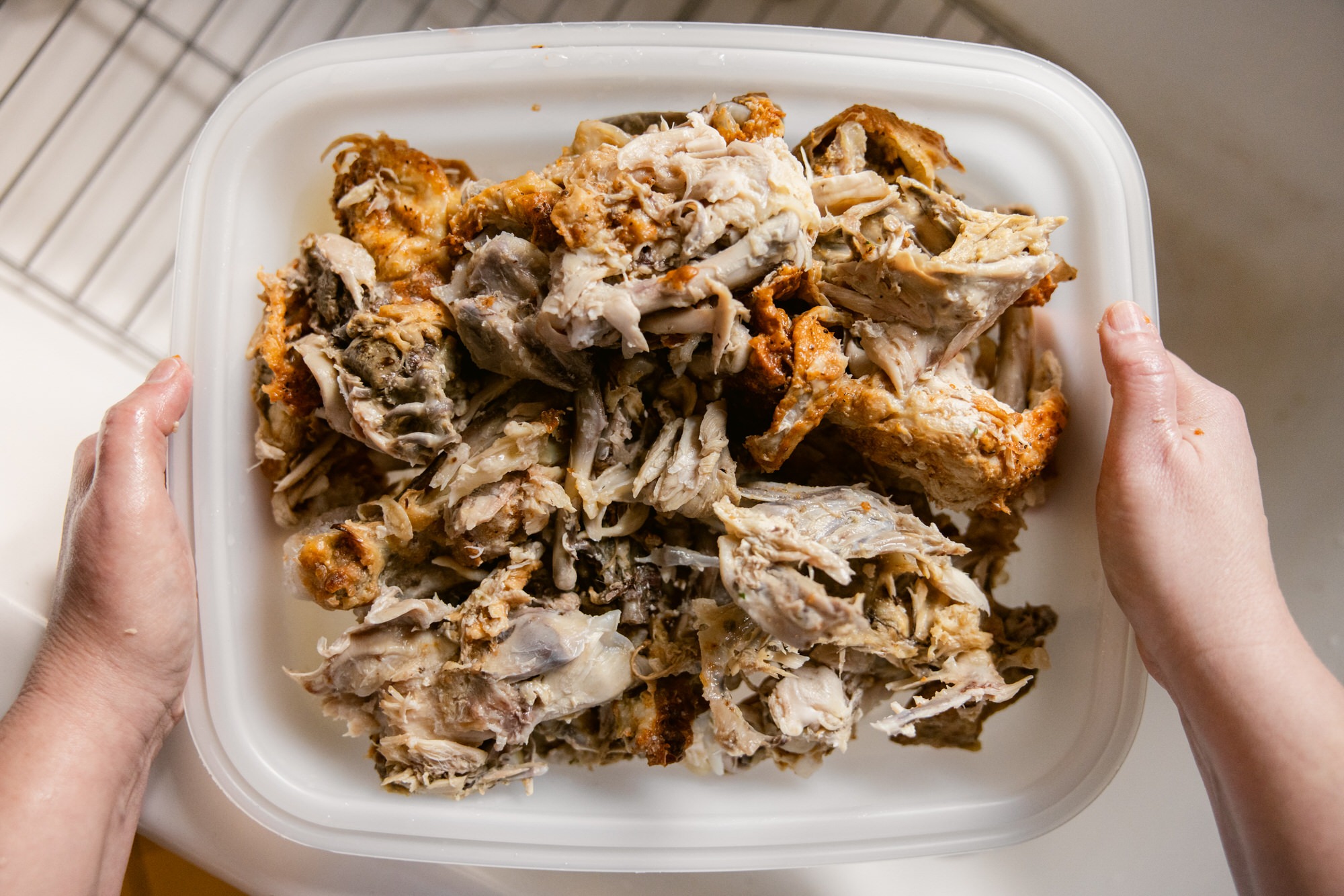
- Chicken carcasses (rotisserie chickens, roasted chickens, wings, thighs… all welcome)
- Onion ends and peels
- Carrot tops and peels
- Celery leaves and ends
- Garlic skins and cloves
- Herb stems (parsley, thyme, rosemary)
- The occasional sad leek top that deserved better
All of this goes straight into freezer bags labeled “STOCK”, because future-you deserves clarity.
Liz’s system is simple:
- Freeze everything
- Repeat until Steve questions his life choices.
The Great Stock Day Reckoning
Once a year (or whenever the freezer physically cannot close), it’s time.
This is a full-day, cozy, house-smells-amazing, we-own-stock-now kind of project.
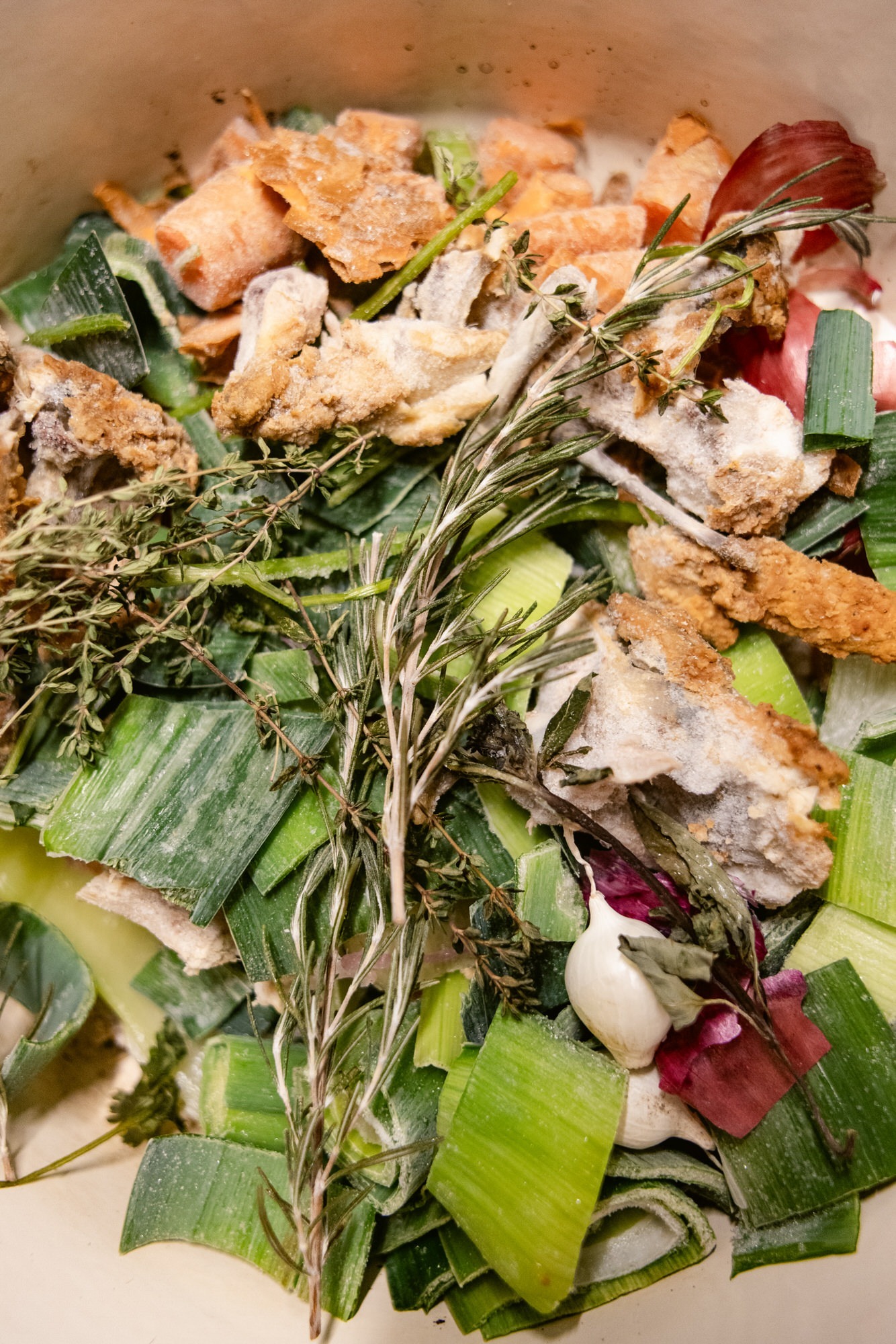
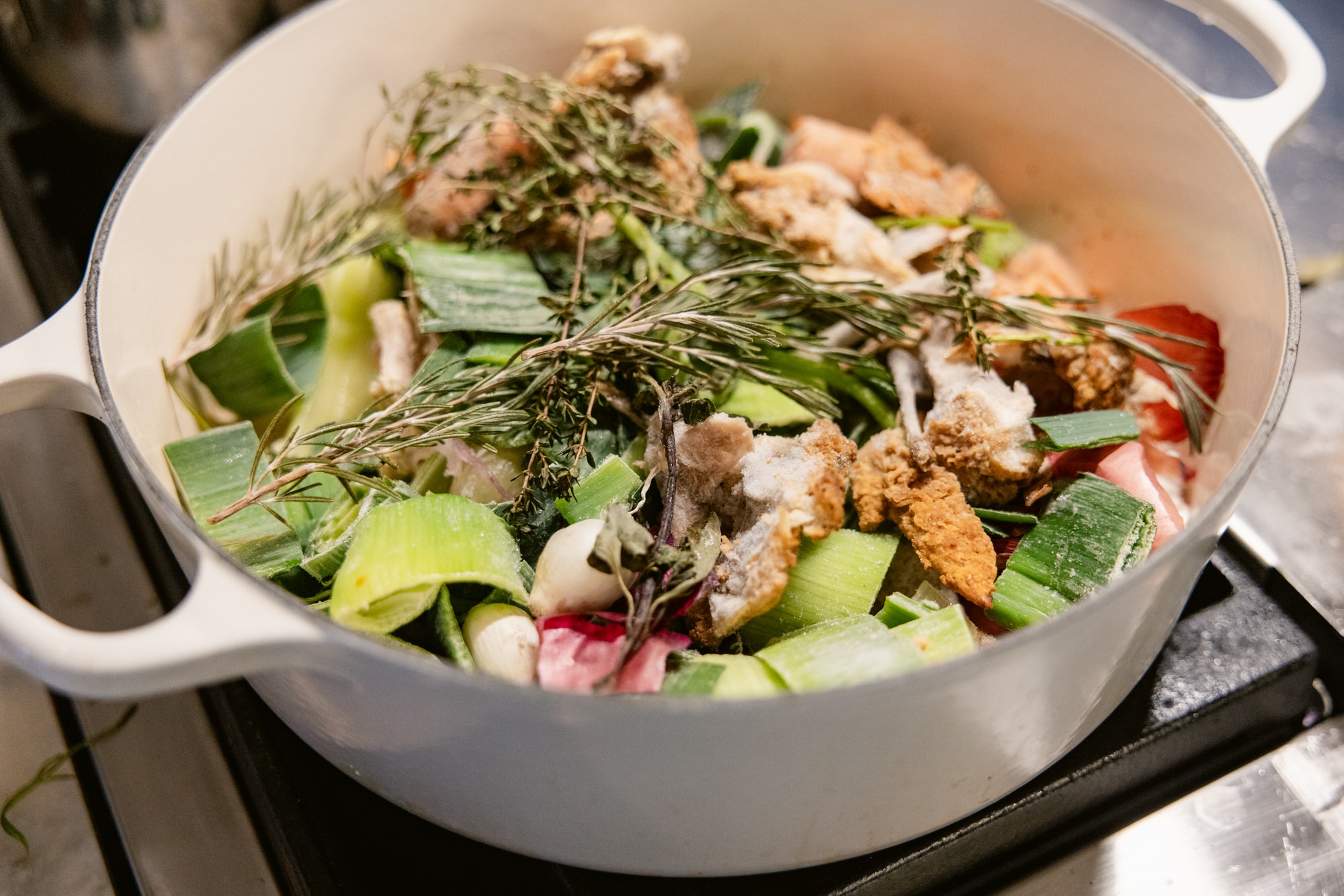
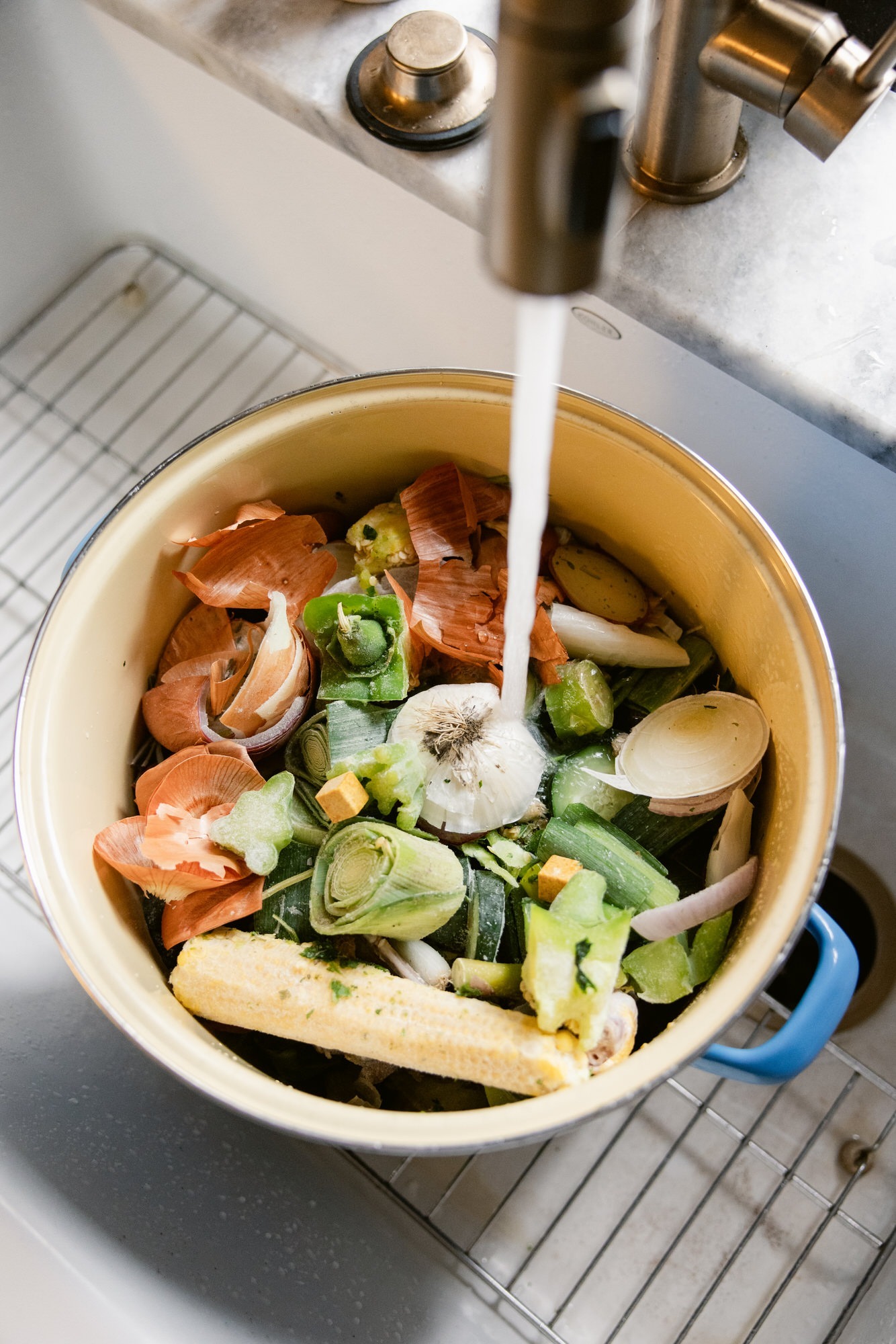
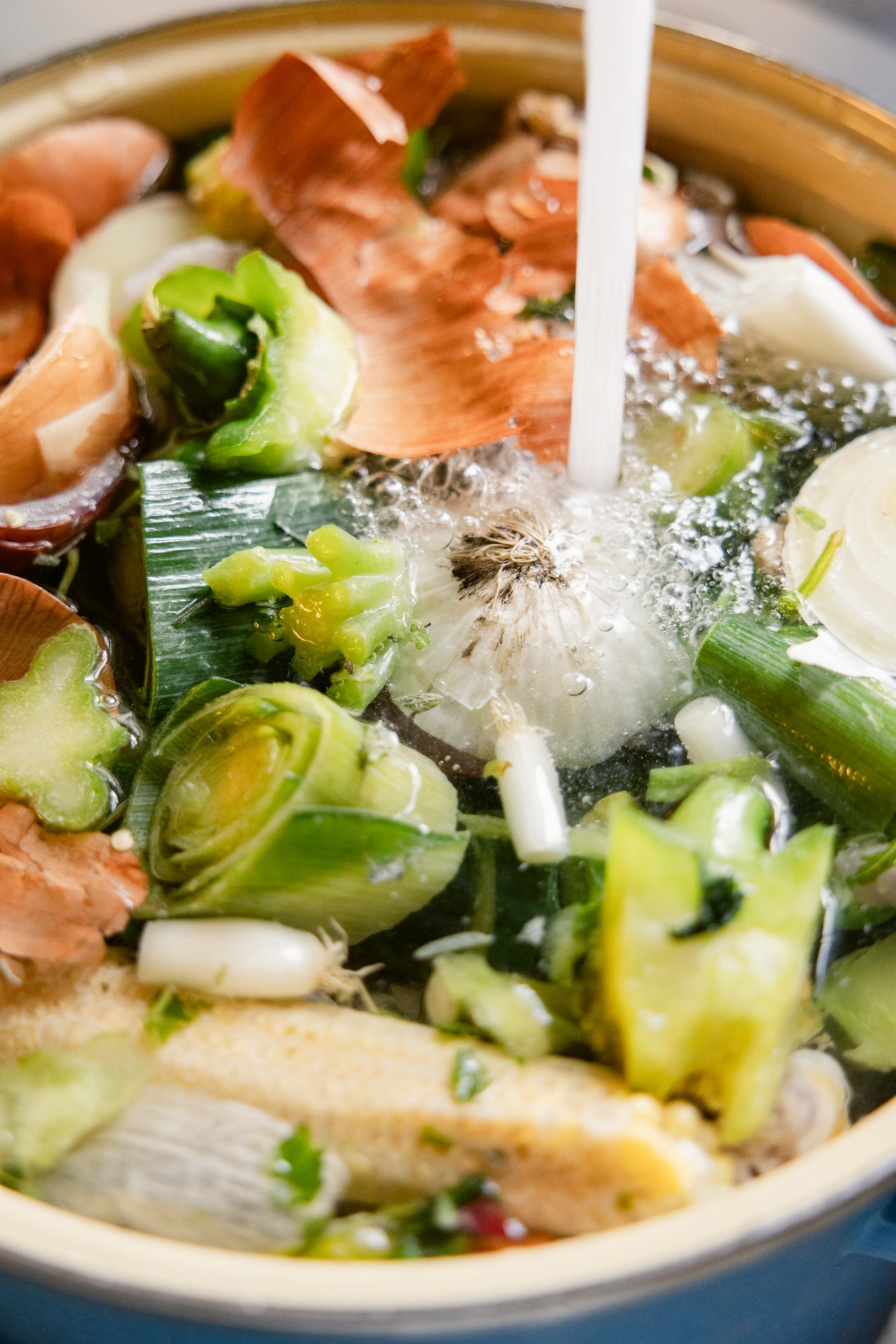
Step 1: Add all of your saved chicken bones, frozen vegetables, and herb scraps to the largest pot you own. If you think the pot is too big, it’s not. Cover everything with cold water.
Step 2: Bring it to a quick boil, then reduce to a low simmer.
Step 3: Let it simmer overnight or up to 24 hours, because Liz is not here for half-flavored stock. For the last few hours, leave it uncovered so it reduces a bit and gets richer, stronger, and very aware of its purpose.
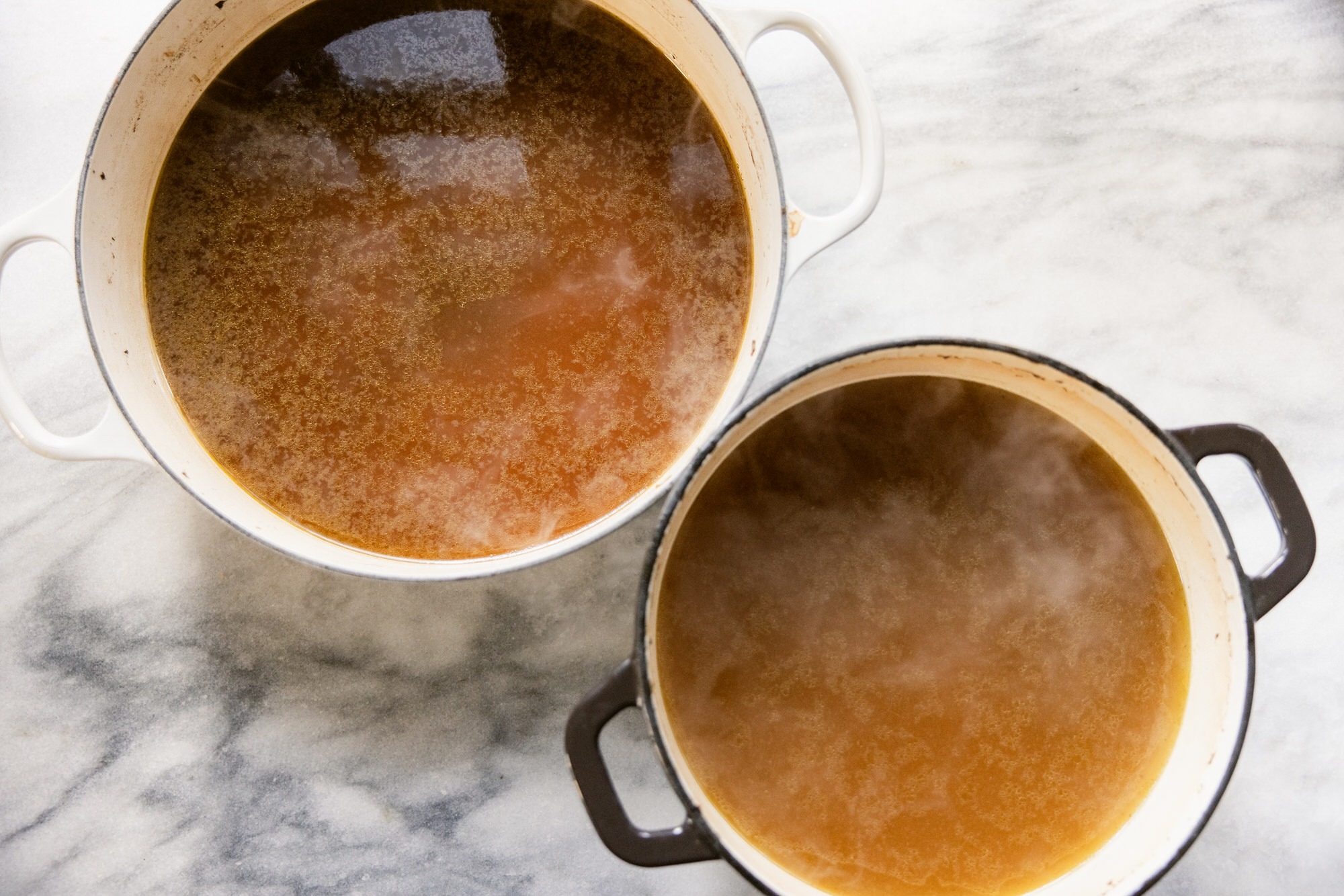
Step 4: Before straining, bring the stock back to a slight boil. Yes, some experts say not to do this. Liz says she’s not a Michelin-star chef and prefers to kill off any lingering germs before freezing an entire year’s worth of bones.
Strain, Store, Brag Quietly
Once it’s done:
- Strain out the solids. Once through a wide-mesh strainer, then again through a fine-mesh strainer. Cheesecloth is optional if you’re feeling particularly accomplished that day.
- Taste it. This is non-negotiable. We always add a little chicken bouillon at the end to bring out that extra chickeny flavor (a real word now).
- Let the stock cool
- Skim the fat if you want (or don’t—this is a no-judgment kitchen)
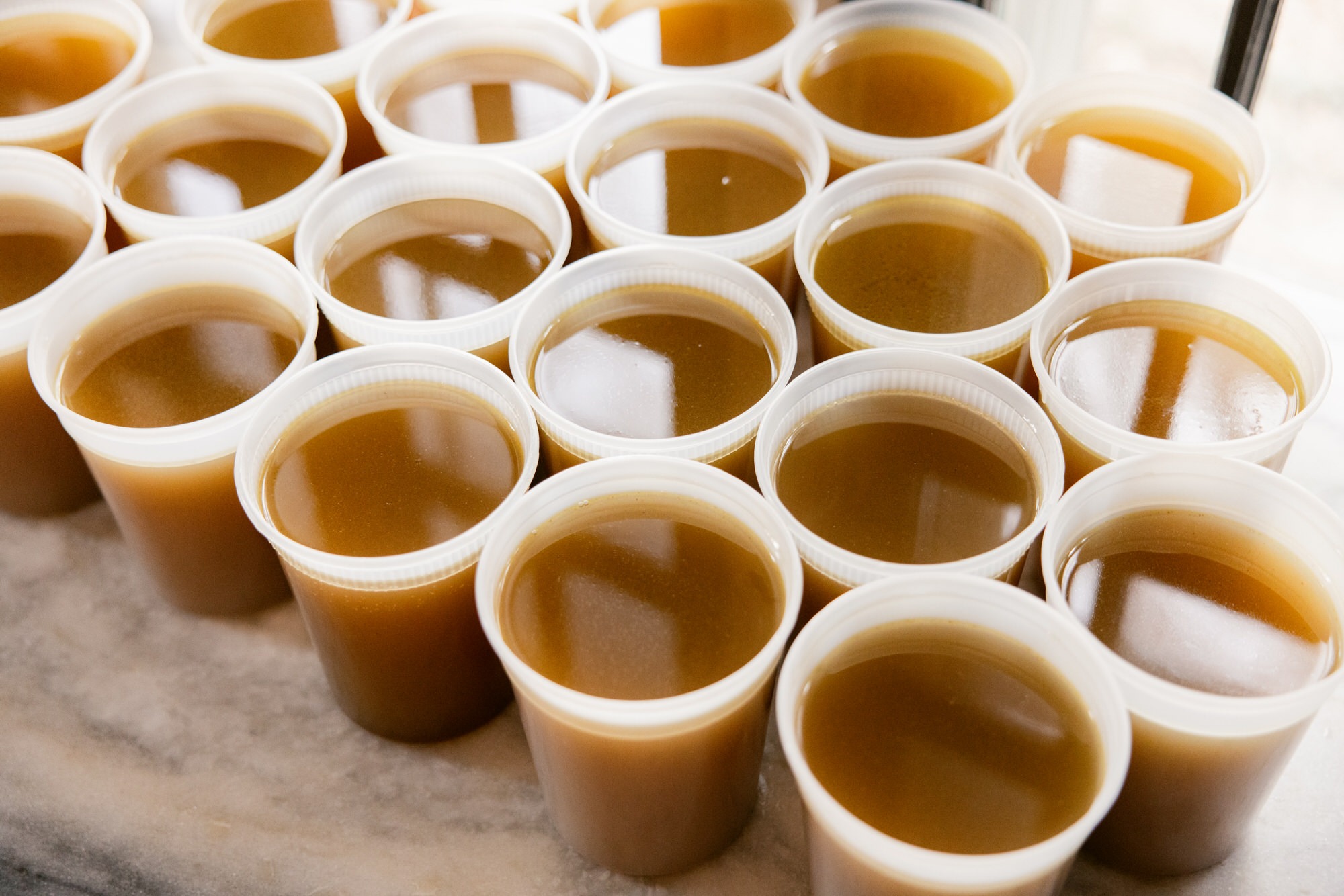
- Store in jars, freezer containers, or silicone molds for easy portions. Do not fill them to the top. Stock expands when frozen.
Congratulations.
You now own liquid gold.
You now own liquid gold.
Use it for:
- Soups
- Risotto
- Gravy
- Braising
- Or sipping straight from a mug like a Victorian orphan with excellent skin
The Moral of the Story
Saving scraps feels a little feral at first.
Then it feels smart.
Then it feels elite.
Then it feels smart.
Then it feels elite.
Yes, Liz took over the deep freeze.
Yes, Steve panicked every time he wanted a frozen hamburger patty.
But when winter rolled around, and homemade stock appeared?
Suddenly, no one was complaining.
So start a bag. Or two. Or ten.
Label it. Commit to the chaos.
And remember:
Label it. Commit to the chaos.
And remember:
You’re not hoarding. You’re preparing.
Pretty Together tip: If your freezer becomes unusable, just remind everyone
“This is what sustainability looks like.”
“This is what sustainability looks like.”
